




 Whitman Expo
-
Russo-Chinese Bank Currency & Banknote Values
Banknote Book® Price Guide

Sort by
Sponsor

Sponsor

Sponsor

Sponsor

Sponsor

Legal Disclaimer
The prices listed in our database are intended to be used as an indication only. Users are strongly encouraged to seek multiple sources of pricing before making a final determination of value. CDN Publishing is not responsible for typographical or database-related errors. Your use of this site indicates full acceptance of these terms.
The Greysheet Catalog (GSID) of the Russo-Chinese Bank series of China Foreign Banks in the World Currency contains 66 distinct entries with CPG® values between $2,500.00 and $35,000.00.
The Russo-Chinese Bank (RCB) was founded in the Russian embassy in Paris, France on 5 December 1895 with Russian and French capital on the initiative of the then Russian minister of finance, Sergei Witte. It lent money to China and issued Chinese government bonds to finance its indemnity to Japan after the First Sino-Japanese War. On 28 August 1896, the Chinese government bought into the bank for the construction of the China Eastern Railway, with the Chinese name for the bank translating as the “Sino-Russian Righteous Victory Bank.”
Construction of the Chinese Eastern Railway began in 1898 and the Russo-Chinese Bank began collecting fares for passengers and freight as soon as traffic started in 1902. A large Russian colony grew up in the concession zone along the line and the bank served to assist in the extensive development of this new industry and commerce.
By 1906, the bank had become the second largest bank in China and had opened branches in Beijing, Bombay, Hankou, Hong Kong, Japan, London, New York, the Russian Far East, Shanghai, Siberia, Tianjin, and San Francisco, although the latter was destroyed just after opening by the great quake of 18 April 1906.
The Russo-Chinese Bank took a huge hit from the Russo-Japanese War (1904 - 1905). Having actively financed Russian military operations, the bank lost most of the funds accumulated prior to the war. Business declined sharply. To survive, the bank merged with several other imperial Russian banks. In July 1910, it merged with Banque du Nord, created by Société Générale in 1901 and with extensive interests in Saint Petersburg and elsewhere in Russia, to form the Russo-Asiatic Bank (RAB).
In 1918, after the Russian Revolution, the Soviet government nationalized all banks within its territory, including the Russo-Asiatic Bank. A separate Russo-Asiatic Bank set up new headquarters in Paris the same year, and remained owner of the Chinese Eastern Railway Company. The Russo-Asiatic Bank was dissolved on 26 September 1926, after losing 5 million pounds sterling in foreign currency speculation on the Paris financial markets.
In addition to the printed signatures, issued notes have a handwritten control signature in a panel at lower center front or back.
See More See Less


Sponsor
Sponsor
Sponsor
Sponsor
 Loading more ...
Legal Disclaimer
The prices listed in our database are intended to be used as an indication only. Users are strongly encouraged to seek multiple sources of pricing before making a final determination of value. CDN Publishing is not responsible for typographical or database-related errors. Your use of this site indicates full acceptance of these terms.
Available on Greysheet Marketplace
View All
Auction Ends: 11/1/2026
Auction Ends: 11/1/2026
Auction Ends: 11/1/2026

Buy Now: $1,250.00
Dealer Directory
View All Dealers



Greysheet News
View All News
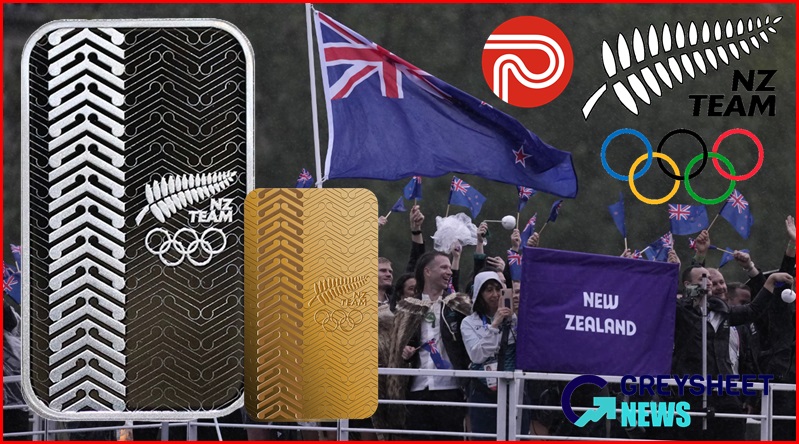
The Reserve Bank of New Zealand have released a new range of collector coins in celebration of the Paris Olympics.

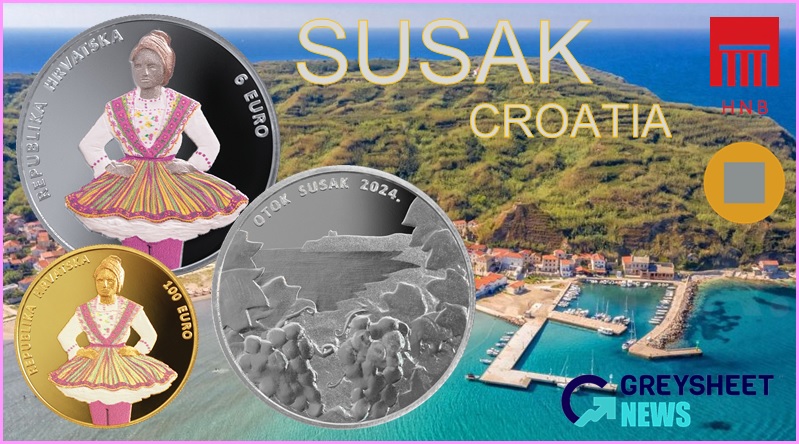
The Croatian National Bank issue new gold and silver collector coins in the Croatian Heritage series.
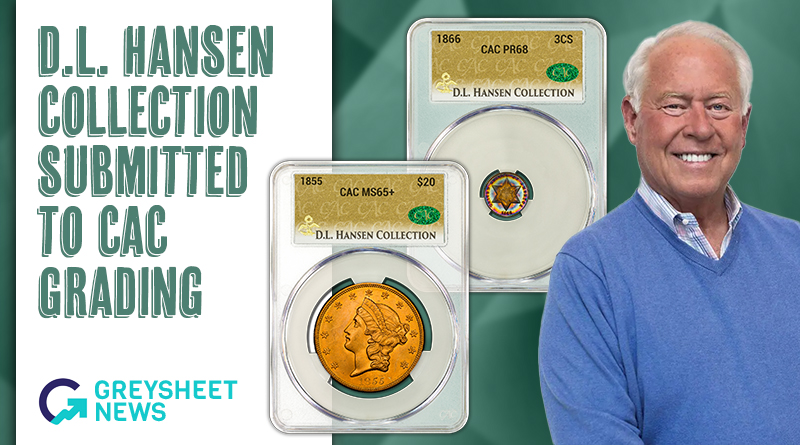
The unprecedented crossover underscores his personal efforts to combat “grade inflation.”
Events
View All Events


Rothchild Catering & Conference Center

Saturday, August 1, 2026

Coinacopia Building
Saturday, August 1, 2026

Fort Mason Gallery 308 Building A
Saturday, August 1, 2026