




 Whitman Expo
-
Patterns (1850) Values
Greysheet & Red Book® PRICE GUIDE


Sort by
Sponsor

Sponsor

Sponsor

Sponsor

Sponsor

Legal Disclaimer
The prices listed in our database are intended to be used as an indication only. Users are strongly encouraged to seek multiple sources of pricing before making a final determination of value. CDN Publishing is not responsible for typographical or database-related errors. Your use of this site indicates full acceptance of these terms.
The Greysheet Catalog (GSID) of the Patterns (1850) series of Pattern Coinage in the U.S. Coins contains 22 distinct entries with CPG® values between $1,500.00 and $150,000.00.
History and Overview
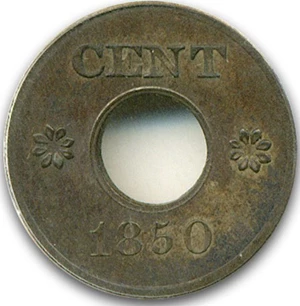
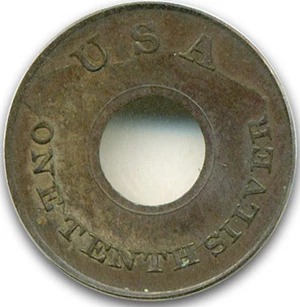
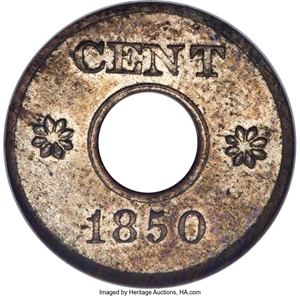
In 1850, patterns were struck for a new version of the cent. This was the first in an extensive series of patterns for a small-diameter cent to replace the copper “large cent” so familiar in circulation. A smaller, lighter coin would be less expensive to produce and would also result in increased profits for the Mint. At the time, the Mint had its own profit account for half cents and cents, while the larger silver and gold denominations returned only the expenses of coining, not an operating profit.1
The pattern cents of 1850 were made of billon, an alloy of 90% copper and 10% silver, to bring the intrinsic value of the coin up to an acceptable level, creating a piece that was lighter than the pure copper cent then in use. A perforation at the center, in the style of Oriental coins, enabled the pieces to be of larger diameter than would otherwise be the case, and helped distinguish them from dimes.2
Also highly important among the patterns of 1850 is J-125, a silver three-cent piece, featuring on the obverse a liberty cap with rays, with the date 1850 below—the same general motif having been used elsewhere earlier (such as on the March 23, 1836 Mint medal and the pattern gold dollar of the same date). The reverse of the trime features a circular palm branch (in the style of the reverse of the 1836 pattern gold dollar) with UNITED STATES OF AMERICA surrounding, and III within. Rather than being a hastily made combination of dies such as the J-111 to J-114 trimes of 1849, J-125 of 1850 is a pattern with distinctive designs made especially for what was anticipated to be a new denomination.
The final piece attributed to 1850 is J-126, a striking of the $20 gold design in silver, from an obverse working die for which the date had not been punched in. Whether this was struck in 1850 or some other year of the era is not known.
Collecting Perspective
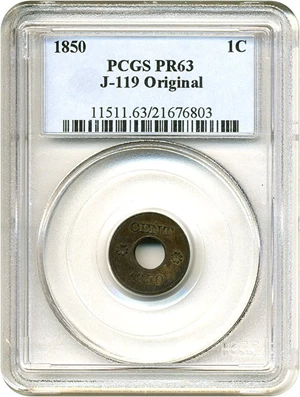
Among the patterns of 1850, the cents from J-119 to J-124 exist in sufficient numbers that perforated as well as unperforated examples can be acquired.3 Some of the original billon pieces have a dull surface, possibly from pickling at the Mint, or possibly from effects of metal instability combined with age. Generally, little distinction is made in the market between originals and restrikes. Later, beginning circa 1859, extensive restrikes were made, generating most of the pieces that are available for acquisition today, these being J-120 through J-124. Some of these restrikes were not perforated in the center. Another variety, known in white metal (J-124a), combines an 1850 obverse die with rosettes (like that used to strike J-l 19 through J-124), with a reverse of a die known to have been employed in 1853 (J-149). The 1850 trime or silver three-cent pattern with liberty cap and rays marks a prize acquisition for any collector, representing the first distinctively different die pairing of what would become a regular coinage denomination in the following year, 1851.
See More See Less






Sponsor


 Loading more ...
Legal Disclaimer
The prices listed in our database are intended to be used as an indication only. Users are strongly encouraged to seek multiple sources of pricing before making a final determination of value. CDN Publishing is not responsible for typographical or database-related errors. Your use of this site indicates full acceptance of these terms.
Available on Greysheet Marketplace
View All
Auction Ends: 11/2/2026
Auction Ends: 11/2/2026
Auction Ends: 11/2/2026
Auction Ends: 11/2/2026
Dealer Directory
View All Dealers




Greysheet News
View All News
The unprecedented crossover underscores his personal efforts to combat “grade inflation.”

Dazzling rarities, free educational opportunities, family fun and more await at the Donald E. Stephens Convention Center
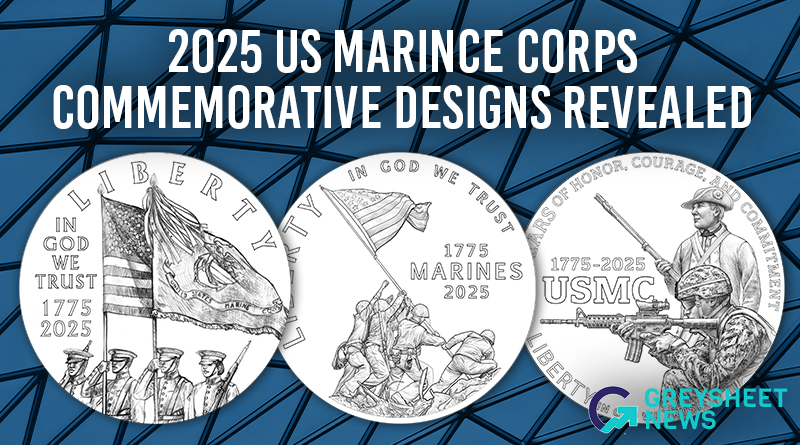
The designs will be featured on a $5 gold coin, a $1 silver coin, and a half dollar clad coin.
Events
View All Events

Rothchild Catering & Conference Center

Saturday, August 1, 2026
Coinacopia Building
Saturday, August 1, 2026

Fort Mason Gallery 308 Building A
Saturday, August 1, 2026